
City guide · Sat, Nov 21, 2026
Atlanta on screen: the Hollywood of the South, location by location
Atlanta is the Hollywood of the South: a downtown that plays other cities, the Jackson Street Bridge view that opened The Walking Dead, Tyler Perry Studios behind closed gates, and the Marvel locations spread across the metro. The free views first, the limits next, and the one bookable tour that strings them together.
Every visitor to Atlanta eventually has the same odd moment: a street looks familiar, and it is not deja vu. It is television. For two decades Georgia has been one of the busiest filming jurisdictions in the world, and Atlanta is its stage: a downtown that can play New York or Chicago or a fictional Marvel capital, neighborhoods that have hosted zombies, superheroes, getaway drivers and reality stars, and the largest studio complex in the country sitting behind gates in the southwest of the city. This guide works the screen city the way you would actually visit it: the free views first, the honest limits next, and the tour that ties the locations together at the end. For what is shooting and screening while you are here, our events calendar carries the listings.
Start at the bridge: the most filmed view in Atlanta
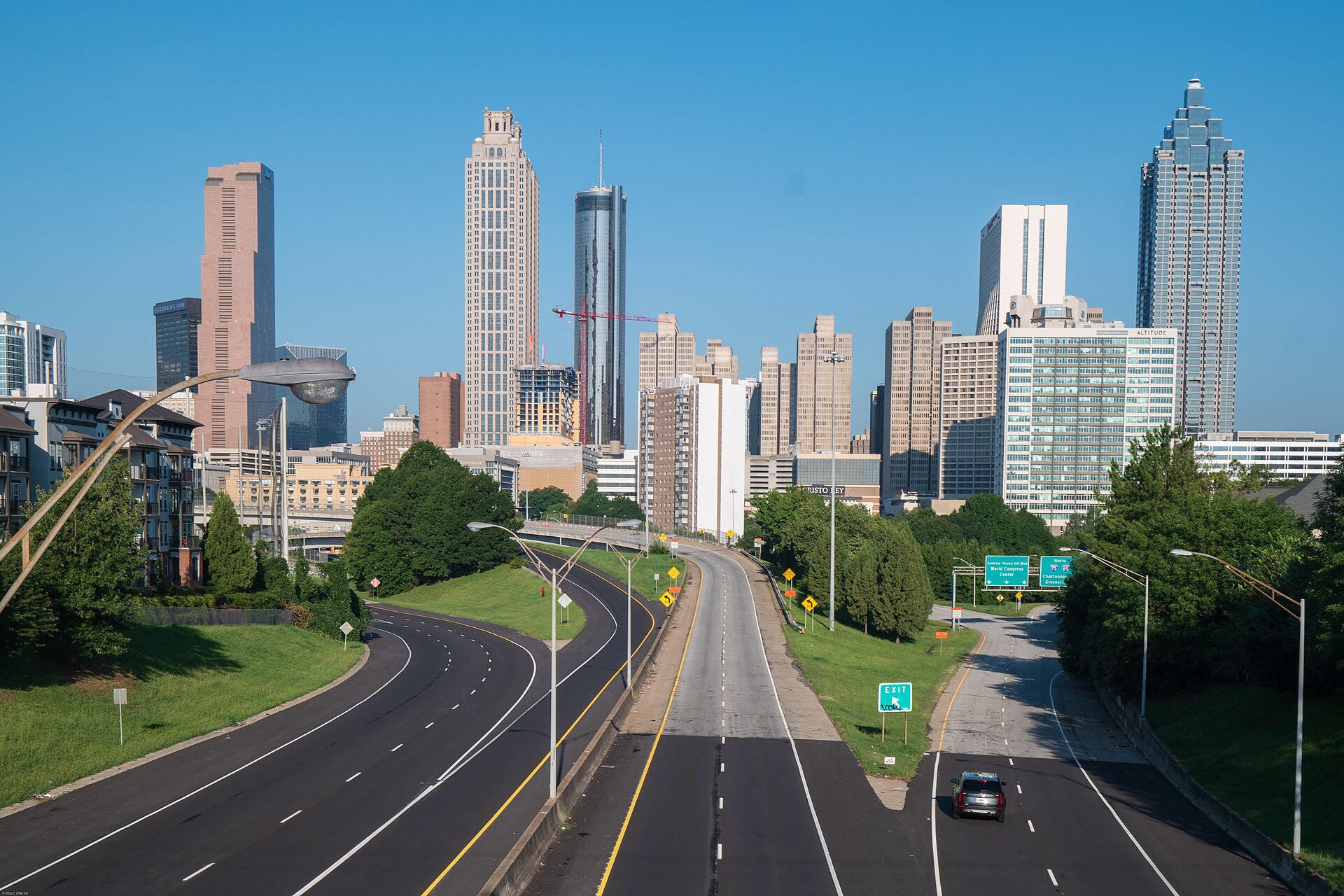
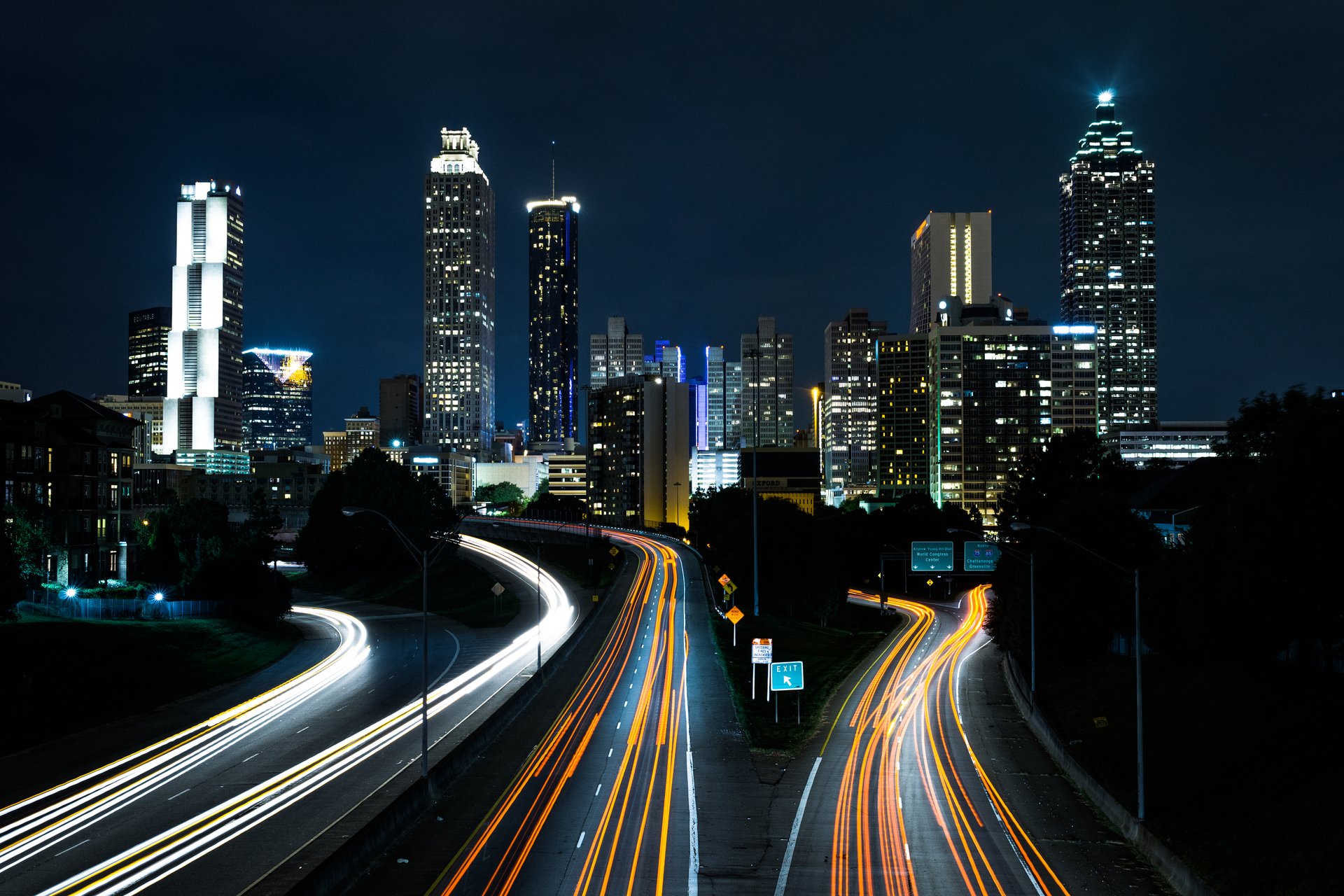
The single most recognizable shot of Atlanta on screen costs nothing. The Jackson Street Bridge, in the Old Fourth Ward east of downtown, looks west over the John Lewis Freedom Parkway straight at the skyline, and it is the view that opened The Walking Dead's story: Rick Grimes riding a horse down an empty highway toward a silent city, in the pilot episode that turned Atlanta into the capital of zombie television. The poster's image was taken from this bridge, and fans have been photographing their own version of it ever since. Go in the morning, when the light is on the towers and the parkway below is at its quietest, and keep to the bridge's pedestrian space: it is a working road bridge, not a viewing platform, and the photograph takes two minutes.
The bridge also teaches the first lesson of the film city. Almost nothing in that famous shot is dressed. The skyline, the parkway and the towers are simply Atlanta on a normal day, which is the whole secret of why productions come: the city photographs as itself, and as half a dozen other places, with very little help.
Downtown: the streets that play everywhere else
Walk west from the bridge into downtown and you are on the backlot. The towers and street grids around Peachtree Street, Broad Street and Woodruff Park have stood in for other cities in production after production, because the architecture mixes eras the way older American downtowns do, and because a filming unit can close a block here in a way it cannot in Manhattan. Marvel productions are the current headline tenants: the private film locations tour described below builds its route around them, naming Black Panther, The Avengers, Loki and Falcon and the Winter Soldier among the productions whose locations it visits, including the school that played Peter Parker's high school in Spider-Man. You do not need a guide to feel it: stand at Five Points or outside the Fox Theatre in Midtown, a 1929 movie palace that is a filming location and a working venue in its own right, and the odds are good that something you have watched was shot within a few blocks.
The honest caveat belongs here too. A location is usually just a street. There is no plaque, no set dressing left behind, and on any given day the most likely film industry sighting is a convoy of white trucks and a closed sidewalk for a production whose name is a code word on a yellow sign. Location hunting in Atlanta is an exercise in recognizing places, not visiting attractions, and it is better for being planned that way.
Tyler Perry Studios: the giant you cannot tour
The industry's anchor sits in southwest Atlanta: Tyler Perry Studios, built on the former Fort McPherson army base, which Tyler Perry acquired in 2015. The numbers, from the studio's own published descriptions, are 330 acres, twelve purpose-built sound stages, forty buildings on the National Register of Historic Places and 200 acres of greenspace and backlot. It is one of the largest production facilities in the United States, and it is the single best symbol of what the industry has become here: a permanent, locally owned studio city, not a visiting circus.
And you cannot go in. State this plainly, because search results will try to sell you otherwise: Tyler Perry Studios does not operate a public tour program. There are no walk-up tickets, no scheduled visitor days, and security at the gates turns away anyone not on a production or event list. Tours sold by third parties visit the studio from outside only, for photographs at the perimeter, and any product implying entry should be read very carefully before it is paid for. The studio is a workplace. See it from the street, respect the gates, and spend your touring money on the locations that are genuinely public, which in Atlanta is most of the interesting ones anyway.
The working city: what the industry means on the ground
It is worth understanding why the trucks are everywhere. Georgia built this industry deliberately, with a state film tax credit that made Atlanta the cost-effective alternative to Los Angeles and New York, and the productions followed the stages: Tyler Perry Studios in the southwest, and a ring of other sound stages and production facilities across the metro area. The result, for a visitor, is a city whose economy visibly includes film: crew caterers in Castleberry Hill, location scouts' signs on lampposts, extras agencies, and neighborhoods like Senoia, south of the city, which played Woodbury and then Alexandria's exterior world in The Walking Dead and now receives its fans as a small industry of its own. Senoia is a drive, not a walk, and it belongs to a dedicated fan day rather than this city route; the in-town circuit below is the one to do first.
A self-guided half day, for the ones who would rather walk
If tours are not your thing, the core of the screen city fits a walk. Start at the Jackson Street Bridge in the morning for the skyline shot, then walk west on John Lewis Freedom Parkway and through the Old Fourth Ward into downtown. Give Woodruff Park and the Broad Street boardwalk your lunch hour: this is the downtown that productions dress as other cities, and with a coffee in hand you can play the recognition game at your own pace, tower by tower. Ride MARTA one stop or walk north to Midtown for the Fox Theatre's marquee and the Arts Center streets, then finish where the industry eats and drinks, in Castleberry Hill, the warehouse district southwest of downtown whose galleries and restaurants have hosted reality television's Atlanta for a decade and where the walking tours of that world begin. The whole route is free, it takes four unhurried hours, and it covers everything in this guide except the studio perimeter and the far-flung Marvel sites, which are the tour's territory below.
The bookable way to do it: one private tour
You can self-guide the bridge, downtown and Midtown in a day on foot and by MARTA, and for many visitors that is enough. The case for the tour is the driving: the locations are spread across a spread-out city, the Marvel sites in particular sit miles apart, and a guide who knows which anonymous office block played which headquarters saves you an afternoon of staring at maps. The wired option on this site is a three hour private tour with hotel pickup and drop off in downtown or Midtown, built around the Marvel locations, with the guide playing the relevant clips as you go so the street in front of you matches the scene you remember.
Book the Hollywood of the South private film locations tourvia Viator · affiliate link
Note what the tour itself states, because it is the honest version: entry to film studios is not included, and never is, on any Atlanta film tour. What you are buying is the route, the knowledge and the car.
Where to base it
Midtown is the film fan's base: the Fox Theatre, the Midtown stages and the Arts Center MARTA station are all there, downtown and the bridge are minutes south, and the neighborhood eats and drinks better than the convention district. Base there and the whole screen city is a rail line away.
Stay in Midtownvia Booking.com · affiliate link
Atlanta's film city is not a theme park and does not pretend to be. It is a working industry laid over a real city, which is exactly why it rewards the visit: the bridge is free, the streets are public, the studio gates are closed, and the stories are on every second corner. Go and recognize somewhere.
More reading on the articles page, or go straight to the events calendar.