
Music guide · Fri, Nov 13, 2026
Atlanta live music: a guide to the city's great rooms
Atlanta hears music in rooms with real character: a 1929 movie palace, a former Baptist church, a Little Five Points cinema, a purpose built hall beside the BeltLine and a Decatur listening room where the audience stays quiet. Which room suits which night, what is seated and what is standing, and how to get there on MARTA.
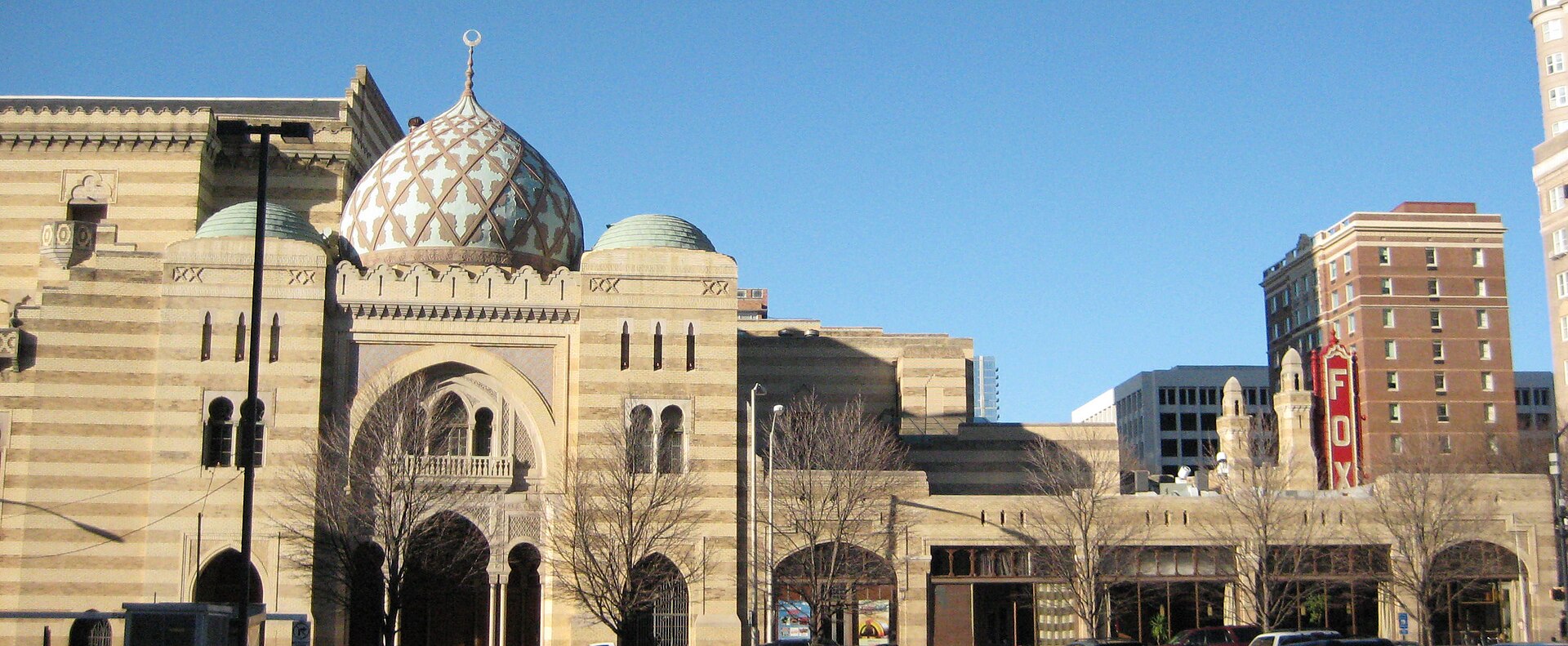
Atlanta does not have one live music scene. It has several, stacked by room size, and the room is half the night. The same singer can play a silent listening room in Decatur one year, a converted cinema in Little Five Points the next, and the Fox Theatre the year after that, and each show feels like a different art form. This guide works through the great rooms in the order most visitors meet them, says plainly which ones are seated and which ones are standing, and covers the practical habits that make concert going in this city run smoothly.
The grand rooms: Fox Theatre and the Tabernacle
Start with the two rooms people photograph before they take their seats.
The Fox Theatre, at 660 Peachtree Street NE in Midtown, is the grandest room in the South for a touring show. It opened on Christmas Day in 1929 as a movie palace in full Moorish dress: minarets and onion domes outside, and inside an auditorium built to look like an Arabian courtyard under a night sky, complete with flickering stars. The Fox seats 4,665 people, according to its own about page, and hosts more than 200 performances a year, from touring Broadway and ballet to rock concerts and comedy. Concerts here are seated. You buy a numbered seat, you keep it, and the pleasure is the scale of the room itself as much as the band. If an act you love plays one Atlanta date and it is at the Fox, take it. There is no second version of this evening anywhere else in the city. The nearest MARTA station is North Avenue, on the Red and Gold lines, a short walk east to Peachtree Street. If no show fits your dates, the Fox also runs guided architecture and history tours on selected days, sold through its own site, and that is the honest way in without a performance ticket.
Downtown, the Tabernacle, at 152 Luckie Street NW, is a former Baptist church completed in 1911 and converted into a concert hall for the 1996 Olympic period. It now holds about 2,600 people, run by Live Nation. The format is the opposite of the Fox in one important way: the main floor is usually general admission standing, while the balconies above it carry the seating. That split decides your night. Stand on the floor and you are in the crowd, close and loud. Take a balcony seat and you look down on the whole sanctuary, plasterwork, arched windows and all, with the stage framed the way a pulpit once was. For older knees and better sightlines, the balcony is the professional choice. Five Points and the SEC District station, formerly GWCC/CNN Center, are both within walking distance, so this is an easy MARTA night from Downtown, Midtown or the airport line.
The middle rooms: Variety Playhouse, The Eastern, Center Stage and Buckhead Theatre
Most good touring music in Atlanta, the acts too big for a club and too interesting for an arena, lands in the middle rooms. Learn these four and you understand the calendar.
Variety Playhouse, at 1099 Euclid Avenue NE in Little Five Points, is the connoisseur's room. It began in 1940 as the Euclid Theatre, a neighborhood cinema, and it still feels like one, in the best way: theater style seats, a balcony, and a lowered pit in front of the stage for people who want to stand and dance. The venue's own guidance puts capacity at 1,100 for general admission shows, with a mix of standing and fixed seating, and lower numbers when a show is laid out with extra tables and seats. Read the event page before you buy, because the layout changes by genre. A folk or jazz night here can be largely seated and hushed. A funk night is a dance floor with seats at the back. Either way the sound is the point: this room has a long standing local reputation for being the place where a band's quiet songs still land. Inman Park station, on the Blue and Green lines, is the MARTA stop, followed by a walk through one of the city's best wandering neighborhoods. Come early and eat in Little Five Points first.
The Eastern, in Reynoldstown at the Atlanta Dairies complex on Memorial Drive, is the standout new room. It opened in September 2021, purpose built for music, with a capacity of 2,300, a multi tier main floor, a U shaped balcony and a rooftop space above it. Where the Tabernacle gives you history, The Eastern gives you design: sightlines were the brief, so the floor rises in tiers and the back is not the punishment it can be in older halls. Shows are mostly general admission standing. It sits a short walk from the BeltLine's Eastside Trail, which makes a pre show walk and dinner in Reynoldstown or Inman Park an easy plan. Edgewood/Candler Park and Inman Park are the nearest MARTA stations, each a longer walk or a short ride away, so allow time for that last leg.
Center Stage, at 1374 West Peachtree Street NW in Midtown, is really three venues in one building, and Atlanta regulars use the names precisely. Center Stage Theater, the original room, holds about 1,050, with permanent seating above and room to stand on the floor for many shows. The Loft, upstairs, holds about 650 and is standing room. Vinyl, the smallest room at about 300, is where local and regional acts, album release shows and early tours play, mostly standing, with a handful of high tables. A ticket that says Vinyl is not a lesser ticket; it is a different promise, a band close enough to read the set list. Arts Center station, on the Red and Gold lines, is a short walk away, which makes the whole complex the simplest Midtown night out in this guide.
Buckhead Theatre, at 3110 Roswell Road NW, brings the middle scale to the north side. It opened in 1930 in Spanish Baroque style, lived several lives including years as the Coca-Cola Roxy, and reopened under its original name in 2010. Capacity is about 1,800, and the room mixes a standing main floor for most concerts with seated options depending on the show. For visitors staying in Buckhead it saves the cross town trip entirely, and for everyone else it pairs a show with dinner in Buckhead Village. The catch is transport: Buckhead and Lenox MARTA stations serve the district, but the theater itself is a drive or ride share distance from either for most people, so plan the return before the encore, not after it.
The listening room and the dive end
At the small end, Atlanta's spectrum runs from reverent silence to cheerful noise, and both ends are worth a night.
Eddie's Attic, upstairs at 515-B North McDonough Street in Decatur, is the city's famous listening room. Visit Decatur puts the audience at around 170 people, and the distance between listener and singer is measured in feet. The house rule, understood by everyone who goes, is quiet during the songs: no talking over the music, phones away, attention on the stage. Singer songwriters built this room's name, and generations of them have tested new songs here before taking them to bigger stages. Seats and tables go first for popular shows, so book early through the venue, and make an evening of Decatur Square, which is one of the most pleasant places in metro Atlanta to eat before a show. Decatur station, on the Blue Line, sits right by the Square. Of every venue in this guide, this is the easiest arrival and the hardest ticket to replace with anything else.
Book a place to stay in Decaturvia Booking.com · affiliate link
The Masquerade, now in Kenny's Alley at Underground Atlanta, is the city's multi stage workhorse for rock, metal, punk, electronic music and everything loud in between. Its rooms carry their old names: Heaven, at about 1,450, Hell at about 650, Purgatory at about 300, and a smaller room, Altar, added in 2024 at about 250. Shows are general admission standing, bills often run to three or four acts, and two or three rooms can run on the same night, so check which room your ticket names. Five Points station is the MARTA arrival. This is not a seated, contemplative night; it is the place Atlanta's heavier music has called home, in one building or another, since 1989.
For the true dive end, look to the bars that put a band in the corner and charge little or nothing at the door. Northside Tavern, on Howell Mill Road in West Midtown, is the name locals give first: a genuine dive bar with live blues most nights, a pool table, and no interest in being anything else. Shows like this are rarely ticketed in advance. You check the venue's own listings, you turn up, and you bring cash for the door and the band, and you confirm on the day.
The arena scale
Above the theaters sit two buildings that host music at a different order of size. State Farm Arena, downtown beside Centennial Olympic Park, is the indoor arena: home to the Atlanta Hawks, and the regular stop for arena tours whose production needs a roof and five figure crowds. Seating is fully reserved and tiered, and the SEC District station, on the Blue and Green lines, opens almost at its door. Mercedes-Benz Stadium, a few minutes west, is the stadium scale: the Falcons' home, used for the very largest concert tours, with a retractable roof and crowds in the tens of thousands. For stadium shows the advice is logistical. Buy early, arrive before the support act, and let MARTA carry you out while the car parks empty slowly.
How Atlanta concert going actually works
A few patterns will save you money and temper.
First, onsales. Tours usually announce early in the week and go on general sale later that week, most often on a Friday morning local time, with presales in between for fan club, venue and promoter lists. The venue's own site is always the place to confirm who the official seller is, usually Ticketmaster or the venue's box office for the big rooms, and the venue or its named partner for Eddie's Attic, Variety Playhouse and the Center Stage rooms. Small room sellouts happen quietly, days after onsale, with no second date added, so join the mailing lists of the rooms you care about. If a show is sold out, use official resale routes linked from the venue where they exist, and be sceptical of any site that will not name its fees before checkout.
Second, seating language. Reserved means a numbered seat is yours all night, the standard at the Fox and the arenas. General admission, or GA, means standing room in order of arrival, the standard at The Eastern, the Masquerade and The Loft. GA floor with seated balcony, the Tabernacle pattern, means choosing between energy and comfort at two prices, and there is no wrong answer, only an honest one about how long you like to stand.
Third, getting there. MARTA serves the Fox, Center Stage, the Tabernacle, the Masquerade, Eddie's Attic and both big arenas directly or with a short walk, and on a concert night the train beats the Downtown Connector at its worst. Driving works best for Buckhead Theatre and The Eastern; for both, plan parking or your ride before the show. Doors are usually an hour before the listed time, support acts are real in the middle rooms and worth arriving for, and most rooms are strict about bag size, so travel light.
Staying over for a show, Downtown puts the Tabernacle, the Masquerade and both arenas at your door, and Midtown puts the Fox and Center Stage on your street.
Book a place to stay in Downtownvia Booking.com · affiliate link
Book a place to stay in Midtownvia Booking.com · affiliate link
Pick the room that fits the music you want to hear, then check the Atlanta What's On events calendar for what is actually on while you are here, and set an alert so the next great room announces itself to you first.
More reading on the articles page, or go straight to the events calendar.